

Unstable Knee
What is an Unstable Knee?
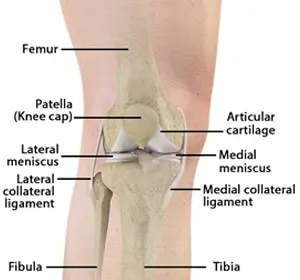
The knee joint is one of the largest joints in the body. This highly complex joint has several tissues supporting and stabilizing its movement:
- Condyles and menisci: Bony protrusions of the thighbone called condyles fit snugly into the depressions of the lateral and medial menisci (spongy cartilage) of the shinbone.
- Ligaments: These are bands of tissue crisscross across the joint bones, connecting and holding them in place.
- Capsules: These are tissue that connects the bones of the knee, by forming a sleeve over the joint.
- Muscles: They provide secondary stability.
Tyler Bron, M.D.
Board-certified Orthopaedic SurgeonDr. Bron completed his fellowship in Adult Reconstruction, specializing in the treatment of arthritic hip & knee conditions at the University of Colorado in Aurora. He received specialized training in dealing with complex injuries of the hip and knee & has a particular interest in the treatment of hip arthritis through a muscle-sparing Anterior Approach. Dr. Bron works diligently with each & every patient to customize treatment plans & optimize outcomes to meet the patient’s individual goals.
What are the Causes of an Unstable Knee?
Damage to any of these supportive structures causes instability of the knee joint. An unstable knee can be caused by the sudden twisting of the knee, tears of the meniscus, ligament or capsule, osteoarthritis of the knee (wear and tear of the cushioning cartilage tissue between the bones) and sports injuries. When these tissues get injured, the patella or kneecap can move out of its groove in the knee joint and lead to instability
What are the Symptoms of an Unstable Knee?
An unstable knee causes pain, swelling, stiffness and a tendency of the joint to buckle or give way
How is Unstable Knee Diagnosed?
When you present with these symptoms, your doctor diagnoses knee instability by performing a thorough physical examination to test the stability of each ligament and may order imaging tests such as X-rays, MRI or CT scans to confirm the diagnosis.
What is the Treatment for an Unstable Knee?
Treatment depends on the cause and severity of the condition. Initially, your surgeon may recommend conservative treatments such as rest, ice application, compression and elevation of your leg (R.I.C.E.), physical therapy and use of braces. Pain relieving medications may be prescribed for symptomatic relief
However, when these conservative treatments yield an unsatisfactory response, surgical correction may be recommended. Considering the type and severity of an injury, your surgeon decides on the surgical repair or reconstruction of the joint by replacing the damaged parts with a prosthesis.
Schedule an Appointment
Our team is here to answer your questions and help you find the right treatment for your condition.