

Revision Knee Replacement in Colorado Springs, CO
Revision knee replacement in Colorado Springs, CO is a specialized procedure used to address problems with a previous knee replacement. Revision surgery may involve replacing one or more components of an existing knee implant, or in some cases, removing and replacing the entire prosthesis.
A previous knee replacement may require revision because of implant wear or loosening, infection, instability, fracture, stiffness, bone loss, or persistent pain. Because revision surgery can be more complex than an initial knee replacement, careful evaluation and individualized treatment planning are important.
Dr. Tyler Bron, MD, is a board-certified orthopaedic surgeon specializing in adult reconstruction and hip and knee conditions. His practice includes revision knee replacement, total and partial knee replacement, and management of degenerative joint conditions. During your evaluation, Dr. Bron can assess your symptoms, previous surgery, physical examination findings, and imaging to help determine the cause of your knee problems and whether revision surgery may be appropriate.
Tyler Bron, M.D.
Board-certified Orthopaedic SurgeonDr. Bron completed his fellowship in Adult Reconstruction, specializing in the treatment of arthritic hip & knee conditions at the University of Colorado in Aurora. He received specialized training in dealing with complex injuries of the hip and knee & has a particular interest in the treatment of hip arthritis through a muscle-sparing Anterior Approach. Dr. Bron works diligently with each & every patient to customize treatment plans & optimize outcomes to meet the patient’s individual goals.
What is Revision Knee Replacement?
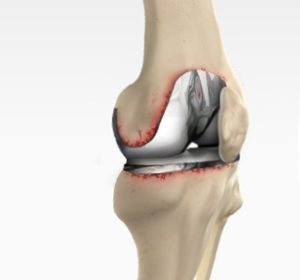
Revision knee replacement surgery involves replacing a part or all your previous knee prosthesis with a new prosthesis. Although total knee replacement surgery is successful, sometimes the procedure can fail due to various reasons and may require a second revision surgery.
What is Arthritis?
The knee joints are lined by soft articular cartilage that cushion the joints and aid in smooth movement of the joint bones. Degeneration of the cartilage due to wear and tear leads to arthritis, which is characterized by severe pain.
What is Total Knee Replacement?
During total knee replacement, the damaged cartilage and bone is removed from the knee joint and replaced with artificial components. Artificial knee joints are usually made of metal, ceramic or plastic, and consist of the femoral and the tibial components.
What are the Indications for Revision Knee Replacement?
Revision knee replacement surgery may be advised if you have one or more of the following conditions:
- Trauma to the knee joint
- Chronic progressive joint disease
- Increased pain in the affected knee
- Worn out prosthesis
- Knee instability or a feeling of giving way while walking
- Loosening of the prosthesis
- Infection in the prosthetic joint
- Weakening of bone around the knee replacement - a process known as osteolysis (bone loss)
- Stiffness in the knee
- Fracture
What is the Procedure for Revision Knee Replacement?
Revision knee replacement surgery may involve the replacement of one or all the components.
The surgery is performed under general anesthesia. Your surgeon makes an incision over your knee to expose the knee joint. The kneecap along with its ligament may be moved aside so that there is enough room to perform the operation. Then, the old femoral component of the knee prosthesis is removed. The femur is prepared to receive the new component. In some cases, the damaged bone is removed and bone graft or a metal wedge may be used to make up for the lost bone.
Next, the tibial component along with the old plastic liner is removed. The damaged bone is cut and the tibia is prepared to receive the new component. Like the femur, the lost bone is replaced either by a metal wedge or bone graft. Then, a new tibial component is secured to the end of the bone using bone cement. A new plastic liner will be placed on top of the tibial component. If the patella (kneecap) has been damaged, your surgeon will resurface and attach a plastic component. The tibial and femoral components of the prosthesis are then brought together to form the new knee joint, and the knee muscles and tendons are reattached. Surgical drains are placed for the excess blood to drain out and the incision is closed.
What are the Risks and Complications of Revision Knee Replacement?
Like all major surgical procedures, there may be certain risks and complications involved with revision knee replacement surgery. The possible complications after revision knee replacement include:
- Stiffness in the knee
- Infection
- Bleeding
- Formation of blood clots in the leg veins
- Injury to nerves or blood vessels
- Prosthesis failure
- Patella (kneecap) dislocation
- Ligament injuries
What Does Postoperative Care for Revision Knee Replacement Involve?
Following revision knee replacement surgery, a continuous passive motion (CPM) machine may be used to allow your knee joint to slowly move. The machine, attached to the treated leg, slowly moves the joint through a controlled range of motion, while you are at rest.
You can walk with crutches or a walker. You will be sent for rehabilitation within a couple of days of surgery. A physical therapist will teach you specific exercises to strengthen your leg and restore range of motion to the knee. Your physical therapist will also provide you with a home exercise program to strengthen the thigh and calf muscles.
Knee immobilizers are used when performing physical therapy, walking and while sleeping to keep the knee stabilized.
Why Choose Dr. Tyler Bron for Revision Knee Replacement in Colorado Springs?
Revision knee replacement requires careful assessment of the existing implant, surrounding bone and soft tissues, and the underlying reason for the previous knee replacement problem. Dr. Tyler Bron provides specialized adult reconstruction care in Colorado Springs.
- Board-certified orthopaedic surgeon: Bron is board certified by the American Board of Orthopaedic Surgery.
- Adult reconstruction fellowship training: He completed orthopaedic surgery residency training through the University of Kansas and an adult reconstruction fellowship at the University of Colorado.
- Revision surgery experience: His practice includes revision procedures as part of his specialized hip and knee reconstruction care.
- Comprehensive knee replacement care: Bron treats patients requiring total and partial knee replacement as well as management of arthritic and degenerative knee conditions.
- Individualized surgical planning: Revision surgery varies significantly depending on the cause of implant failure, bone condition, stability, infection status, and other factors. Treatment is planned around each patient's specific circumstances.
- Patient-focused approach: Bron emphasizes communication, understanding each patient's goals, and discussing appropriate treatment options, including conservative care when surgery is not immediately necessary.
Revision Knee Replacement FAQs
Revision knee replacement is a surgical procedure to repair or replace a previous knee replacement. Depending on the problem, the surgeon may replace one component, several components, or the entire knee prosthesis.
A knee replacement may require revision because of implant loosening or wear, infection, instability, fracture, stiffness, bone loss, or other problems that cause pain or interfere with knee function.
No. Persistent pain after knee replacement can have several possible causes, and revision surgery is not automatically necessary. A detailed evaluation is important to identify the underlying problem and determine whether nonsurgical treatment or revision surgery is appropriate.
Your evaluation may include a medical history, physical examination, X-rays, and other imaging or laboratory tests when indicated. If infection or another specific complication is suspected, additional testing may be recommended.
Revision surgery can be more complex because the surgeon may need to remove existing implants and address changes to the bone and soft tissues. The complexity varies depending on the reason for revision and the condition of the knee.
The surgical approach depends on the underlying problem. The surgeon may remove some or all of the existing components, prepare the femur and tibia for new implants, address bone loss when necessary, and place new components to restore knee stability and function.
Osteolysis is a process in which bone around a joint replacement is lost or resorbed. It can occur around an implant and may contribute to loosening or other complications. Your surgeon can evaluate bone loss using imaging and determine whether treatment is needed.
Yes. Infection involving a knee prosthesis is a serious potential complication and may require specialized treatment. The appropriate treatment depends on factors such as the timing and severity of the infection and the condition of the implant and surrounding tissues.
Recovery varies considerably depending on the complexity of the revision and the patient's overall health and condition. Rehabilitation may include walking assistance, physical therapy, exercises to restore strength and range of motion, and activity modifications. Your postoperative plan will be individualized.
Physical therapy is commonly an important part of rehabilitation after revision knee replacement. Your therapist and surgeon will develop a program based on your procedure, stability, strength, range of motion, and progress.
Postoperative equipment and rehabilitation protocols vary. A CPM machine, brace, or knee immobilizer may be used in selected circumstances, but these devices are not appropriate or necessary for every patient. Your surgeon will determine what is appropriate for your specific procedure and recovery.
Potential complications include infection, bleeding, blood clots, stiffness, nerve or blood vessel injury, instability, implant failure, fracture, and persistent symptoms. Revision surgery may also require additional procedures in some cases. Dr. Bron can discuss the potential risks and benefits during your consultation.
Schedule a Revision Knee Replacement Consultation in Colorado Springs, CO
If you are experiencing persistent pain, instability, stiffness, or other problems after a knee replacement, an evaluation can help identify the underlying cause and determine your treatment options.
Dr. Tyler Bron provides revision knee replacement care in Colorado Springs, CO, using an individualized approach to complex knee reconstruction. Contact Colorado Springs Orthopaedic Group to schedule a consultation and discuss whether revision knee replacement or another treatment option may be appropriate for you.
Schedule an Appointment
Our team is here to answer your questions and help you find the right treatment for your condition.