

Patella Fracture
What is a Patella Fracture?
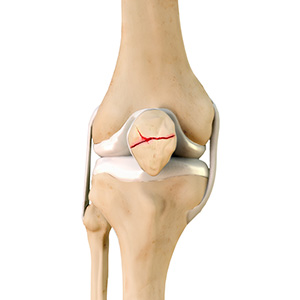
The kneecap or patella forms a part of the knee joint. It is present at the front of the knee, protecting the knee and providing attachment to various muscle groups of the thigh and leg. The undersurface of the kneecap and the lower end of the femur are coated with articular cartilage, which helps in smooth movement of the knee joint. A fracture in the kneecap is rare but common in adult males
What are the Causes of Patella Fracture?
The most common cause of fracture is a direct blow to the kneecap such as a fall or a motor vehicle accident. The patella can also be fractured indirectly, due to a sudden contraction of the thigh muscles.
Tyler Bron, M.D.
Board-certified Orthopaedic SurgeonDr. Bron completed his fellowship in Adult Reconstruction, specializing in the treatment of arthritic hip & knee conditions at the University of Colorado in Aurora. He received specialized training in dealing with complex injuries of the hip and knee & has a particular interest in the treatment of hip arthritis through a muscle-sparing Anterior Approach. Dr. Bron works diligently with each & every patient to customize treatment plans & optimize outcomes to meet the patient’s individual goals.
What are the Symptoms of a Patella Fracture?
Pain and swelling are the predominant symptoms of a patella fracture. You may also experience the inability to walk and difficulty in straightening the knee. Sometimes, bruising may also be seen around the fracture site.
How is Patella Fracture Diagnosed?
The diagnosis of a patella fracture comprises of a physical examination, history of the injury and X-ray imaging to determine the nature and severity of the fracture. The X-ray is the most common and widely used diagnostic tool for identification of fractures
What is Treatment for Patella Fracture?
The treatment of a patellar fracture depends upon the severity and nature of the fracture
Non-surgical treatment
Non-surgical treatment is the first line of treatment when the patella has not been fragmented or displaced. Casts or splints may be used to straighten the knee and help in the healing process. Immobilization of the affected limb for 6 to 8 weeks may also be recommended.
Surgical Treatment
Surgical treatment is suggested in case of displacement of the fractured fragments of the bone or if the distance between the fractured parts is too far, impeding the healing process. Immediate surgery is recommended in case of open fractures where the fractured site is exposed through the skin. The type of procedure to be conducted depends on the nature of the fracture. Transverse fractures are fixed with the help of wires and pins and a "figure-of-eight" configuration tension band while in a comminuted fracture, the small bone fragments are removed from the knee joint
What Does Rehabilitation after Patella Fracture Treatment Involve?
Rehabilitation plays a vital role in helping you resume your daily activities after healing of the fracture. Treatment of the fracture may cause stiffness of the joint and weakness of the muscles. Physical therapy, joint mobilization, and muscle strengthening exercises or weight-bearing exercises are helpful in regaining strength and preventing deformities.
Schedule an Appointment
Our team is here to answer your questions and help you find the right treatment for your condition.