

Partial Medial Knee Replacement
What is Partial Medial Knee Replacement?
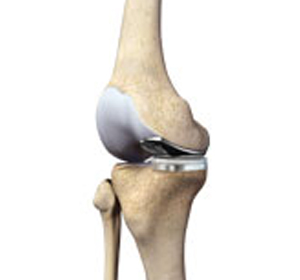
Partial medial knee replacement is a surgery to replace only the medial part of your damaged knee. It is also called unicompartmental knee replacement
The knee is one of the largest and complex joints in your body. The joint is connected to your thigh bones and bones of the lower leg by various ligaments.
The knee joint is made of three compartments, the lateral, medial and patellofemoral compartments. The inside part of your knee is the medial compartment of the knee. It consists of a medial collateral ligament (MCL)
Tyler Bron, M.D.
Board-certified Orthopaedic SurgeonDr. Bron completed his fellowship in Adult Reconstruction, specializing in the treatment of arthritic hip & knee conditions at the University of Colorado in Aurora. He received specialized training in dealing with complex injuries of the hip and knee & has a particular interest in the treatment of hip arthritis through a muscle-sparing Anterior Approach. Dr. Bron works diligently with each & every patient to customize treatment plans & optimize outcomes to meet the patient’s individual goals.
What are the Indications for Partial Medial Knee Replacement?
Aging and joint conditions such as osteoarthritis cause breakdown of the cartilage of your inner knee leading to pain and inflammation which may not respond to pain medications or non-surgical treatment and may need surgery. Damage to the medial side of your knee may also cause knee stiffness requiring surgery
How is Partial Medial Knee Replacement Diagnosed?
Your doctor physically examines your knee by performing specific movements. The exact location and severity of the pain are essential to identify the type and extent of damage occurred. Your doctor will take your medical history and may order an X-ray, CT-scan or MRI to finalize the diagnosis
What is the Procedure for Partial Medial Knee Replacement?
- Surgery is performed under general anesthesia or spinal anesthesia. The surgical procedure involves the following steps:
- You are positioned to lie on your back (supine position)
- The surgery is usually performed by arthroscopy. An arthroscope is a narrow tube with a tiny video camera on one end. The structures inside the knee are visible to your surgeon on a monitor in the operating room
- A few small incisions are made in the front and medial side of the knee and an arthroscope is inserted to view the surgical area
- The damaged cartilage at the medial portion of your knee is debrided. Some amount of bone may also be removed
- Metal components with a spacer in between are placed at the inner side of your knee to allow smooth gliding
- The incisions are closed and covered with a dressing.
What Happens After Partial Medial Knee Replacement?
You may have to stay at the hospital for about 3 days. Your doctor prescribes pain medications to keep you comfortable. Your physiotherapist instructs you on how to use your walker or crutches and may begin with light weight-bearing exercises. Specific physical exercises will help you recover fast. You must regularly follow-up with your surgeon and may return to sports after a few months with your surgeon’s approval
What are the Complications of Partial Medial Knee Replacement?
Complications are rare. Some of the possible complications may include:
- Formation of blood clots
- Surgical site infection
- Wear and tear of the implant
- Injuries to ligaments or nerves
- Dislocation of the implant
- Patella problems
What are the Advantages of Partial Medial Knee Replacement?
The advantages of partial medial knee replacement surgery include:
- Smaller incision
- Minimum bone removal
- Shorter hospital stay
- Shorter recovery period
- Blood transfusion rarely required
- Better movement in the knee
- Less need for physiotherapy
- Able to be more active than after a total knee replacement
Schedule an Appointment
Our team is here to answer your questions and help you find the right treatment for your condition.