

Robotic-Assisted Hip Replacement in Colorado Springs, CO
Robotic-assisted hip replacement in Colorado Springs, CO combines modern surgical planning and robotic technology with the expertise of an orthopaedic surgeon to treat painful, damaged hip joints. During robotic-assisted hip replacement, the surgeon uses advanced technology to help plan the procedure and guide implant positioning according to the patient's individual hip anatomy. The robotic system does not independently perform the surgery—the surgeon remains in control throughout the procedure.
Tyler Bron, MD, is a board-certified orthopaedic surgeon specializing in adult reconstruction and hip and knee joint replacement. His practice includes hip replacement and muscle-preserving anterior hip replacement, making him an experienced option for patients seeking specialized hip care in Colorado Springs.
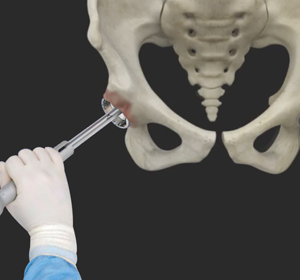
Robotic assistance may be considered for selected patients who require hip replacement because of arthritis or other significant joint damage. During a consultation, Dr. Bron can evaluate your symptoms, imaging, overall health, and treatment goals and determine whether robotic-assisted hip replacement, anterior hip replacement, or another treatment approach is appropriate for you.
If chronic hip pain, stiffness, or reduced mobility is affecting your daily activities, schedule an evaluation with Dr. Tyler Bron in Colorado Springs to discuss your hip replacement options.
What is ROSA Robotic-Assisted Anterior Hip Replacement?
Robotic-assisted anterior hip replacement is a surgical procedure in which the worn out or damaged parts of the hip joint are removed and replaced with artificial hip components called prostheses or implants using an anterior hip approach with the help of a robotic system called ROSA, which stands for Robotic Surgical Assistant.
ROSA - developed by Zimmer Biomet - enables surgeons to carry out hip replacement surgeries with greater precision and a higher standard of care. The ROSA robotic system utilizes real-time information and assists surgeons with the precise placement of the implants based on a person’s unique hip anatomy.
ROSA robotic-assisted anterior hip replacement is a muscle-preserving hip replacement surgery that utilizes a 3- to 6-inch incision on the front of your hip (anterior approach) rather than an 8- to 12-inch incision on the side of your hip as in a traditional hip replacement procedure. This surgery enables your surgeon to preserve much of the muscle tissue that holds your joint tight, thereby reducing the risk of dislocation post-surgery.
What is Anatomy of the Hip?
The hip joint is one of the body's largest weight-bearing joints and is the point where the thighbone (femur) and pelvis (acetabulum) join. It is a ball-and-socket joint in which the head of the femur forms the ball, and the pelvic acetabulum forms the socket. The joint surface is covered by smooth articular cartilage that cushions and enables smooth movement of the joint. The bones are held together by bands of tissue called ligaments that provide stability to the joint.
What are the Indications for ROSA Robotic-Assisted Anterior Hip Replacement?
The ROSA robotic-assisted anterior hip replacement is commonly indicated for individuals with early-to-mid-stage osteoarthritis of the hip exhibiting symptoms such as pain, swelling, and locking that are not amenable to conservative treatment. Osteoarthritis is a degenerative joint disease that causes breakdown and eventual loss of cartilage in the joint making the bones rub against each other leading to painful movement.
In general, your surgeon may recommend ROSA robotic system for the treatment of the following hip conditions, such as:
- Treatment of arthritic conditions, such as osteoarthritis and rheumatoid arthritis of the hip joint
- Severe hip joint fracture or trauma
- Failed total hip replacement
- Malpositioning of the acetabular component
- Dislocation of the joint
- Impingement of the prosthesis
- Aseptic loosening of the prosthesis
- Periprosthetic osteolysis
- Polyethene liner wear of the implant
- Prosthetic joint infection
What is the Procedure for ROSA Robotic-Assisted Anterior Hip Replacement?
In general, the ROSA robotic-assisted anterior hip replacement procedure using the ROSA system is similar to that of a traditional hip replacement procedure but performed with the help of a robotic assistant in an anterior approach. The robotic system does not perform the procedure on its own. The surgery is performed entirely by your surgeon by prompting the robotic hands as per the personalized plan developed by your surgeon. The ROSA system is only an additional tool to guide your surgeon and ensure greater accuracy in the placement of the hip implants. It cannot replace the skills of your experienced surgeon.
The ROSA robotic-assisted anterior hip replacement surgery is done under general anesthesia with you appropriately placed on the operating table. A surgical cut is made over the hip from the front (anterior approach) to expose the hip joint. The ROSA system functions like a high-tech GPS system utilizing optical trackers and a mini camera to determine the exact position of the hip in space. In addition to providing robotic assistance to guide accurate acetabular component orientation, as well as intra-operative assessment of leg length and offset, the application allows surgeons to create a personalized surgical plan with the use of ONE Planner™ Hip. The robotic system makes adjustments even with the slightest movement ensuring the surgical plan designed by your surgeon is carried out without any changes and with a high degree of precision. Throughout the procedure, your surgeon is provided with real-time data by the ROSA system, which enhances your surgeon’s skill enabling accurate placement of the hip implant. Once the surgery is completed, the incision is closed with sutures and covered with a sterile dressing.
What Does Postoperative Care for ROSA Robotic-Assisted Anterior Hip Replacement Involve?
In general, postoperative care and recovery after ROSA robotic-assisted anterior hip replacement procedure involves the following:
- You will be transferred to the recovery area where your nurse will closely observe you for any allergic/anesthetic reactions and monitor your vital signs as you recover.
- Most patients may need to stay in the hospital for 2 to 3 days before being discharged home.
- You may notice pain, swelling, and discomfort in the hip area. Pain and anti-inflammatory medications are provided as needed for comfort.
- Antibiotics are also prescribed to address the risk of surgery-related infection.
- You will be placed on assistive devices such as crutches with instructions on restricted weight-bearing for a specified period of time. You are encouraged to walk with assistance as frequently as possible to prevent blood clots.
- Instructions on surgical site care and bathing will be provided to keep the wound clean and dry.
- Refrain from strenuous activities for the first few months and lifting heavy weights for at least 6 months. A gradual increase in activities over a period of time is recommended.
- An individualized physical therapy protocol will be designed to help strengthen hip muscles and optimize hip function once you are off crutches.
- Most patients are able to resume their normal activities in 3 to 4 weeks after surgery; however, returning to sports or high-intensity activities may take at least 6 months or longer.
- You should refrain from driving until you are fully fit and receive your doctor’s consent.
- A periodic follow-up appointment will be scheduled to monitor your progress.
What are the Benefits of ROSA Robotic-Assisted Anterior Hip Replacement?
Being a muscle-preserving procedure, the ROSA robotic-assisted anterior hip replacement surgery offers the following benefits:
- Smaller incisions
- Shorter operative time
- Minimal blood loss
- Shorter hospital stay
- Less postoperative pain
- Minimal soft-tissue trauma
- Less scarring
- Quicker recovery
- Quicker return to normal activities
- Lower risk of dislocation
- Precise placement of the implant
- Increased longevity of the implant
- Increased stability of the hip
What are the Risks and Complications of ROSA Robotic-Assisted Anterior Hip Replacement?
ROSA robotic-assisted hip replacement surgery is a relatively safe procedure; however, as with any surgery, there are risks and complications that can occur, such as:
- Pain
- Bleeding
- Infection
- Damage to surrounding soft tissues
- Stiffness or instability in the hip
- Allergic/anesthetic reactions
- Blood clots or deep vein thrombosis (DVT)
- Leg length inequality
Why Choose Dr. Tyler Bron for Robotic-Assisted Hip Replacement in Colorado Springs?
Choosing an orthopaedic surgeon for hip replacement is an important decision. Tyler Bron, MD, is a board-certified orthopaedic surgeon with specialized fellowship training in adult reconstruction, focusing on conditions affecting the hip and knee and joint replacement surgery.
Dr. Bron has a particular interest in hip replacement, anterior hip replacement, and advanced approaches to joint reconstruction. His patient-centered philosophy emphasizes understanding each patient's concerns and goals, explaining available treatment options, and considering conservative care when appropriate.
Robotic technology can provide surgeons with additional information and tools for surgical planning and implant positioning. However, technology is an aid to the surgeon rather than a replacement for surgical expertise. Dr. Bron evaluates each patient individually to determine the surgical approach and technology that best fits the patient's condition and treatment needs.
Patients seeking robotic-assisted hip replacement in Colorado Springs, Colorado can receive specialized hip and joint replacement care through Colorado Springs Orthopaedic Group.
Robotic-Assisted Hip Replacement FAQs
Robotic-assisted hip replacement is a hip replacement procedure in which the surgeon uses robotic technology to assist with surgical planning and implant positioning. The damaged portions of the hip are replaced with artificial components. The surgeon remains in control of the procedure and uses the robotic system as an additional surgical tool.
ROSA is a robotic surgical system developed by Zimmer Biomet. In hip replacement surgery, the system can provide information and assistance with surgical planning and component positioning based on the patient's anatomy. The robotic system does not perform the surgery independently; the surgeon controls the procedure.
No. ROSA is a robotic-assisted surgical system, not an autonomous surgeon. Your orthopaedic surgeon performs the procedure and makes the surgical decisions. The technology provides additional information and assistance during the operation.
Robotic-assisted hip replacement may be considered for patients who require hip replacement because of significant joint damage, commonly from arthritis. Whether robotic assistance and a particular surgical approach are appropriate depends on factors such as your diagnosis, anatomy, previous procedures, overall health, and treatment goals.
Severe hip arthritis is a common reason for hip replacement. Other conditions that damage the hip joint may also require replacement surgery. An orthopaedic evaluation and imaging can help determine the cause and severity of your hip problem.
Both procedures involve replacing damaged portions of the hip joint with artificial components. The primary difference is that robotic-assisted surgery incorporates additional technology to help with surgical planning and, depending on the system and procedure, implant positioning. The surgeon remains responsible for performing the operation.
Robotic assistance and the surgical approach are separate considerations. A surgeon may use robotic technology with a particular approach, including an anterior approach, when appropriate. Whether a muscle-preserving technique is suitable depends on the individual patient and the surgeon's assessment.
Robotic technology can be used in conjunction with an anterior approach for appropriately selected patients. Dr. Tyler Bron has a particular interest in muscle-preserving anterior hip replacement, and the appropriate combination of surgical approach and technology is determined based on the patient's individual needs.
Robotic systems are designed to provide surgeons with additional information and assistance during surgical planning and implant positioning. However, surgical outcomes depend on many factors, including patient anatomy, surgical technique, implant selection, and the surgeon's experience. Your surgeon can explain how robotic assistance may apply to your particular procedure.
Recovery varies from patient to patient. Although muscle-preserving approaches and modern surgical techniques may support recovery, there is no single recovery timeline that applies to everyone. Your recovery can depend on your overall health, activity level, surgical approach, rehabilitation, and other factors.
After surgery, your care team will monitor your recovery and provide instructions regarding pain management, wound care, mobility, physical therapy, and activity. Your surgeon will determine when you can safely progress activities and return to driving, work, exercise, and other activities.
Robotic-assisted hip replacement carries many of the same potential risks as other hip replacement procedures. These may include infection, bleeding, blood clots, fracture, nerve or blood-vessel injury, leg-length differences, stiffness, instability, dislocation, implant wear or failure, and persistent pain. Your surgeon will review the potential risks and benefits before surgery.
Persistent hip pain, stiffness, reduced range of motion, difficulty walking, and limitations in everyday activities may be signs of significant hip disease. An orthopaedic evaluation can determine the underlying cause of your symptoms and whether nonsurgical treatment or hip replacement should be considered.
Dr. Tyler Bron, MD, provides specialized adult reconstruction and hip and knee joint replacement care in Colorado Springs through Colorado Springs Orthopaedic Group. His practice includes hip replacement and anterior hip replacement for appropriately selected patients.
Schedule a Robotic-Assisted Hip Replacement Consultation in Colorado Springs, CO
If hip arthritis or another condition is causing persistent pain and limiting your mobility, an evaluation with an experienced orthopaedic surgeon can help you understand your treatment options. Dr. Tyler Bron, MD, provides specialized hip and joint replacement care in Colorado Springs, Colorado, including anterior hip replacement and advanced surgical techniques for appropriately selected patients.
During your consultation, Dr. Bron can evaluate your hip condition, review your imaging, discuss nonsurgical and surgical options, and determine whether robotic-assisted hip replacement may be appropriate for you.
Contact Colorado Springs Orthopaedic Group to schedule a consultation with Dr. Tyler Bron in Colorado Springs, CO.
Take the Next Step for Your Hip
Don't let persistent hip pain and stiffness unnecessarily limit your mobility. Schedule an orthopaedic evaluation in Colorado Springs to discuss your diagnosis and learn whether robotic-assisted hip replacement or another treatment option may be right for you.
Schedule an Appointment
Our team is here to answer your questions and help you find the right treatment for your condition.