
Hip Preservation Surgery
What is Hip Preservation Surgery?
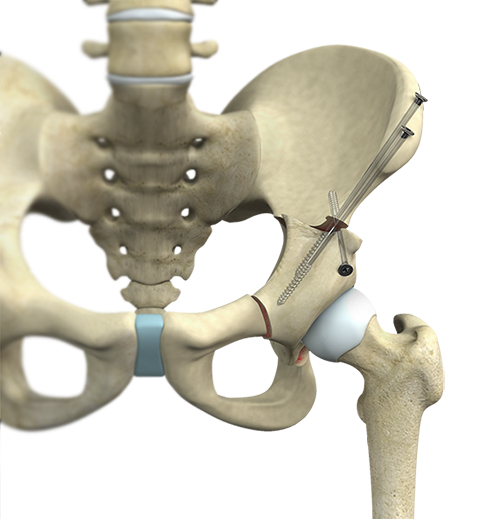
The hip is a ball and socket joint comprising of the femur (thigh bone) and the pelvic bone. The head of the femur (ball) articulates with a cavity (socket) called the acetabulum in the pelvic bone. To facilitate the smooth and frictionless movement of the hip joint, the articulating surfaces of the femur head and acetabulum are covered by spongy articular cartilage. Injury, wear-and-tear and certain diseases can result in the wearing away of the cartilage tissue, causing painful rubbing of bones. Hip replacement surgeries have long been the choice of treatment, where the damaged parts of the joint are removed and replaced with a prosthesis. However, in young active patients, the prostheses are highly prone to wear-and-tear, and the need for repeat surgery. Hip preservation is a surgery that overcomes the limitations of joint replacement.
Tyler Bron, M.D.
Board-certified Orthopaedic SurgeonDr. Bron completed his fellowship in Adult Reconstruction, specializing in the treatment of arthritic hip & knee conditions at the University of Colorado in Aurora. He received specialized training in dealing with complex injuries of the hip and knee & has a particular interest in the treatment of hip arthritis through a muscle-sparing Anterior Approach. Dr. Bron works diligently with each & every patient to customize treatment plans & optimize outcomes to meet the patient’s individual goals.
What are the Indications for Hip Preservation Surgery?
Some of the conditions indicated for hip preservation surgery include:
- Femoroacetabular impingement (FAI): friction in the hip joint from abnormal bony irregularities
- Hip dislocation: head of the femur moves out of the socket
- Hip dysplasia: A congenital hip condition characterized by a shallow acetabulum
- Labral tear: tear or separation of the labrum, a cartilaginous ring that surrounds the socket and seals the hip joint
- Avascular necrosis: disrupted blood flow to the hip joint, causing the death of bone tissue
What is the Procedure for Hip Preservation Surgery?
Hip preservation surgery includes various techniques:
Periacetabular Osteotomy
Periacetabular osteotomy is a surgical procedure to treat hip dysplasia. This involves cutting the acetabulum from the pelvic bone and repositioning it with screws to allow for a better fit of the femoral head. The procedure reduces pain, restores function and prevents further deterioration of the hip joint, thereby increasing the life of the hip joint and postponing total hip replacement
Surgical Hip Dislocation
Surgical hip dislocation is a surgical technique that involves the dislocation of the hip joint during surgery to facilitate easy access to the inside tissues of the hip joint. It helps your surgeon to clearly view and treat abnormalities present deep into the hip joint
Femoral Osteotomy
An osteotomy is a surgical procedure that involves cutting and reshaping of a bone. The femur is cut at the end close to the hip joint and realigned so that it forms a normal angle. This improves the distribution of force placed on the joint and prevents wear-and-tear of the cartilage
Hip Arthroscopy
Arthroscopy, also referred to as keyhole or minimally invasive surgery, is a procedure in which an arthroscope is inserted into a joint to check for any damage and repair it simultaneously. Hip arthroscopy is a surgical procedure performed through very small incisions to diagnose and treat various hip conditions.
The various hip preservation surgeries for severe hip pain and dysfunction in young and active patients have been found to be beneficial, and also avoid or delay the need for hip replacement surgery.
Schedule an Appointment
Our team is here to answer your questions and help you find the right treatment for your condition.