

Hip Instability
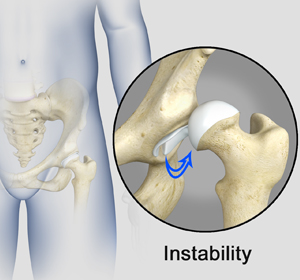
What is Anatomy of the Hip?
The hip plays an important role in supporting your upper body weight while standing, walking and running, and hip stability is crucial for these functions. The femur (thighbone) and acetabulum (socket-shaped region of the pelvis) join to form the hip joint, while the labrum (rim of tissue that seals the hip joint) and the ligaments lining the hip capsule maintain the stability of the hip
What is Hip Instability?
Injury or damage to these structures can lead to a condition called hip instability when the joint becomes unstable
Tyler Bron, M.D.
Board-certified Orthopaedic SurgeonDr. Bron completed his fellowship in Adult Reconstruction, specializing in the treatment of arthritic hip & knee conditions at the University of Colorado in Aurora. He received specialized training in dealing with complex injuries of the hip and knee & has a particular interest in the treatment of hip arthritis through a muscle-sparing Anterior Approach. Dr. Bron works diligently with each & every patient to customize treatment plans & optimize outcomes to meet the patient’s individual goals.
What are the Symptoms of Hip Instability?
The most common symptoms of hip instability include:
- Pain
- Laxity
- Giving way of the hip
- Producing a clicking sound
- Dislocation
What are the Causes of Hip Instability?
Hip instability can be traumatic or atraumatic. Traumatic instability can be caused by injuries from sports or motor vehicle accidents. These injuries can damage the bony structures, labrum, and cartilage of the hip joint and form loose bodies. It can range from severe dislocation to a simple subluxation (partial displacement) of the hip joint. Atraumatic instability can be caused by overuse or developmental/congenital abnormalities of the hip joint.
Conditions that can cause hip instability include:
- Labral and ligament tears
- Hip dysplasia (misaligned hip bones)
- Femoroacetabular impingement (abnormally-shaped hip bones)
- Tears to the ligamentum teres
How is Hip Instability Diagnosed?
Your doctor will diagnosis hip instability based on your medical history and a physical examination. Imaging studies such as plain X-rays, MRI and MRI arthrography (use of a contrast agent) may also be ordered to confirm instability. Your doctor may also perform hip instability tests such as posterior impingement or dial test; both of which involve simple range of motion exercises.
What is the Treatment for Hip Instability?
Your doctor may start you off on a conservative/non-operative treatment approach such as protected weight-bearing (crutch, cane or wheelchair) and referral to a physical therapist for exercises. A physical therapist will instruct you on special exercises that are focused on improving your strength, balance, and flexibility.
When conservative options fail to resolve your symptoms or if you have large fractures, you may be recommended to undergo surgical management. Surgery can be arthroscopic (minimally invasive) or open depending on your condition. Most of the common causes for hip instability, such as damage to the hip capsule and ligaments surrounding the joint and labral tears, can be rectified arthroscopically. Your doctor will be the best person to address your concerns and help you treat your instability.
Schedule an Appointment
Our team is here to answer your questions and help you find the right treatment for your condition.