

Hip Fracture
What is a Hip Fracture?
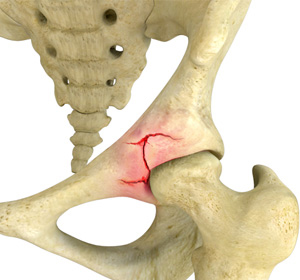
The hip joint is a “ball and socket” joint. The “ball” is the head of the femur or thighbone, and the “socket” is the cup-shaped acetabulum. The joint surface is covered by a smooth articular surface that allows pain-free movement in the joint
A hip fracture is a break that occurs near the hip in the upper part of the femur or thighbone. The thighbone has two bony processes on the upper part - the greater and lesser trochanters. The lesser trochanter projects from the base of the femoral neck on the back of the thighbone. Hip fractures can occur either due to a break in the femoral neck, in the area between the greater and lesser trochanter or below the lesser trochanter
Tyler Bron, M.D.
Board-certified Orthopaedic SurgeonDr. Bron completed his fellowship in Adult Reconstruction, specializing in the treatment of arthritic hip & knee conditions at the University of Colorado in Aurora. He received specialized training in dealing with complex injuries of the hip and knee & has a particular interest in the treatment of hip arthritis through a muscle-sparing Anterior Approach. Dr. Bron works diligently with each & every patient to customize treatment plans & optimize outcomes to meet the patient’s individual goals.
What are the Causes of Hip Fractures?
Hip fracture is most frequently caused after minor trauma in elderly patients with weak bones, and by high-energy trauma or serious injuries in the young. The long-term use of certain medicines increases your risk for hip fractures
What are the Signs and Symptoms of Hip Fractures?
The signs and symptoms of hip fractures include:
- Pain in the groin or outer upper thigh
- Swelling and tenderness
- Discomfort while rotating the hip
- Shortening of the injured leg
- Outward or inward turning of the foot and knee of the injured leg
How are Hip Fractures Diagnosed?
Your doctor may order an X-ray to diagnose your hip fracture. Other imaging tests, such as magnetic resonance imaging (MRI), may also be performed to detect the fracture
Depending on the area of the femur involved, hip fractures are classified as:
- Intracapsular fracture
- Intertrochanteric fracture
- Subtrochanteric fracture
What is the Treatment for Hip Fractures?
Hip fractures can be corrected and aligned with non-operative and operative methods:
Traction may be an option to treat your condition if you are not fit for surgery. Skeletal traction may be applied under local anesthesia, where screws, pins, and wires are inserted into the femur, and a pulley system is set up at the end of the bed to bear heavy weights. These heavy weights help in correcting the misaligned bones until the injury heals
Hip fractures can be surgically treated with external fixation, intramedullary fixation, or by using plates and screws.
Schedule an Appointment
Our team is here to answer your questions and help you find the right treatment for your condition.