

Anterior Hip Replacement in Colorado Springs, CO
Anterior hip replacement in Colorado Springs, CO is a hip replacement approach that allows the surgeon to access the hip joint from the front. Often described as a muscle-sparing approach, anterior hip replacement is designed to access the joint while minimizing disruption to surrounding muscles and soft tissues. It may be an option for appropriately selected patients with painful, advanced hip arthritis or other conditions that have significantly damaged the hip joint.
Tyler Bron, M.D.
Board-certified Orthopaedic SurgeonDr. Bron completed his fellowship in Adult Reconstruction, specializing in the treatment of arthritic hip & knee conditions at the University of Colorado in Aurora. He received specialized training in dealing with complex injuries of the hip and knee & has a particular interest in the treatment of hip arthritis through a muscle-sparing Anterior Approach. Dr. Bron works diligently with each & every patient to customize treatment plans & optimize outcomes to meet the patient’s individual goals.
Tyler Bron, MD, is a board-certified orthopaedic surgeon specializing in adult reconstruction and hip and knee joint replacement. He has a particular interest in muscle-preserving anterior hip replacement and provides individualized evaluations to help determine whether this approach is appropriate based on a patient's condition, anatomy, activity level, and treatment goals.
At Colorado Springs Orthopaedic Group, patients in Colorado Springs and surrounding Southern Colorado communities can receive specialized care for hip arthritis and other conditions affecting the hip. If persistent hip pain, stiffness, or limited mobility is affecting your daily activities, an evaluation with Dr. Bron can help you understand your treatment options, including whether anterior hip replacement may be appropriate for you.
Introduction
Anterior hip replacement is a muscle-preserving hip surgery performed to replace the hip joint without cutting through any major muscles. It is also referred to as muscle-sparing surgery because no major muscles are cut, enabling a quicker return to normal activity.
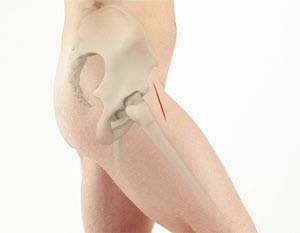
Traditionally with total hip replacement, the surgeon makes the hip incision laterally, on the side of the hip, or posteriorly, at the back of the hip. Both approaches involve cutting major muscles to access the hip joint. With the anterior approach, the incision is made in front of the hip enabling the surgeon to access the joint without cutting through any major muscles.
Indications
Hip replacement is indicated in patients with arthritis of the hip joint. Arthritis is a condition in which the articular cartilage that covers the joint surface is damaged or worn-out causing pain and inflammation.
Some of the causes of arthritis include:
- Advancing age
- Congenital or developmental hip diseases
- Obesity
- Previous history of hip injury or fracture
- Increased stress on hip because of overuse
Symptoms
Patients with arthritis may have a thinner articular cartilage lining, a narrowed joint space, presence of bone spurs, or excessive bone growth around the edges of the hip joint. Because of all these factors, arthritis patients can experience pain, stiffness, and restricted movements.
Diagnosis
Your doctor will evaluate arthritis based on the characteristic symptoms and diagnostic tests. Your orthopaedic surgeon will perform a physical examination, order X-rays and other scans, and also some blood tests to rule out any other conditions that may cause similar symptoms.
Procedure
Anterior hip replacement surgery involves the following steps:
- The procedure is performed under general anesthesia or regional anesthesia.
- You will lie down on your back, on a special operating table that enables the surgeon to perform the surgery from the front of the hip.
- Your surgeon may use fluoroscopic imaging during the surgery to ensure the accuracy of component positioning and to minimize leg length inequality.
- Your surgeon will make an incision, about 4 inches long on the front of the hip. The muscles are pushed aside to gain access to the joint and perform the replacement.
- Next, the femur bone is separated from the acetabular socket.
- The acetabular surface is prepared using a special instrument called a reamer.
- The acetabular component is cemented or fixed with screws into the socket.
- Then a liner made up of plastic, metal, or ceramic is placed inside the acetabular component.
- The femoral head that is worn out is cut off and the femur bone is prepared using special instruments so that the new metal component fits the bone properly.
- Then the new femoral component is inserted into the femur bone either by a press fit or by using special bone cement.
- The femoral head component made of ceramic or metal is then placed on the femoral stem.
- Once the artificial components are fixed in place, the instruments are withdrawn and incisions are closed with sutures and covered with a sterile dressing.
Risks and Complications
All surgeries carry an element of risk whether it is related to anesthesia or the procedure itself. Risks and complications are rare but can occur. Below is a list of complications that can occur following any hip replacement procedure:
- Infection at the incision site or in joint space
- Fracture
- Nerve damage
- Hemarthrosis – excess bleeding into the joint after the surgery
- Deep vein thrombosis (blood clot)
- Leg length inequality
Postoperative Care
After traditional hip replacement surgery, you would be instructed to follow hip precautions to prevent your new hip from dislocating. These guidelines are very restrictive and include:
- No bending or flexing the hip past 90 degrees
- No crossing of legs
- Use a pillow between the legs when sleeping
- Use an elevated toilet seat
With the anterior approach, you will NOT have to follow standard hip precautions. Your doctor will however give you instructions to be followed at home for a faster recovery. These include:
- Take medications as prescribed to relieve pain and prevent infection
- Participate in physical therapy to restore hip function and strength
- Eat a healthy diet and do not smoke to facilitate healing and promote a faster recovery.
- Contact your doctor if you observe increased swelling or redness in the operated area.
Anterior hip replacement surgery has a lower risk of dislocation post-operatively and since it is a muscle-sparing technique, it ensures a faster recovery with less post-operative pain. The anterior approach also allows patients to use their hip joints normally without any restrictions. Talk to your doctor if you have any questions or concerns regarding an anterior hip replacement.
Why Choose Dr. Tyler Bron for Anterior Hip Replacement in Colorado Springs?
Choosing the right orthopaedic surgeon is an important part of planning for hip replacement. Tyler Bron, MD, is a board-certified orthopaedic surgeon with fellowship training in adult reconstruction, a subspecialty focused on conditions affecting the hip and knee and joint replacement surgery.
Dr. Bron has a particular interest in muscle-preserving anterior hip replacement. His approach to patient care emphasizes understanding each patient's concerns and goals, explaining treatment options, and considering conservative treatments when appropriate before recommending surgery.
For patients who require hip replacement, Dr. Bron's experience with anterior hip replacement can provide an additional surgical approach to consider. Not every patient is a candidate for every surgical technique, so the appropriate approach is determined after an evaluation of the patient's individual condition and needs.
Patients seeking anterior hip replacement in Colorado Springs, Colorado can access Dr. Bron's orthopaedic services through Colorado Springs Orthopaedic Group, with locations serving patients in the Colorado Springs area.
Anterior Hip Replacement FAQs
Anterior hip replacement is a type of hip replacement surgery in which the surgeon accesses the hip joint through an incision at the front of the hip. The damaged portions of the joint are removed and replaced with artificial components. The anterior approach is designed to minimize disruption to surrounding muscles and soft tissues compared with some other surgical approaches.
Anterior hip replacement may be considered for patients with significant hip joint damage, commonly caused by arthritis, who have persistent pain and loss of function despite appropriate nonsurgical treatment. Whether anterior hip replacement is appropriate depends on several individual factors and requires an evaluation by an orthopaedic surgeon.
Hip arthritis is one of the most common reasons for hip replacement. Arthritis can cause the cartilage covering the hip joint to wear down, resulting in pain, stiffness, reduced range of motion, and difficulty with everyday activities. Other conditions can also cause enough joint damage to require hip replacement.
Common symptoms include hip pain, stiffness, reduced range of motion, difficulty walking, and pain that becomes worse with activity. Some people may also experience pain in the groin, thigh, buttock, or knee. Persistent or worsening symptoms should be evaluated to determine their underlying cause.
Your orthopaedic surgeon may review your symptoms and medical history and perform a physical examination. X-rays are commonly used to evaluate the hip joint and identify changes associated with arthritis. Additional imaging or laboratory testing may be recommended when needed to evaluate other possible causes of hip pain.
During anterior hip replacement, the patient is positioned so the surgeon can access the hip joint from the front. The damaged femoral head and arthritic portions of the socket are removed and prepared for the replacement components. Artificial components are then placed to recreate the ball-and-socket joint. The incision is closed after the replacement has been completed.
Anterior hip replacement is commonly described as a muscle-preserving or muscle-sparing approach because the surgeon accesses the hip joint from the front and works between muscles rather than routinely cutting through major muscles. Surgical techniques vary, and the size of the incision and extent of tissue disruption can differ between patients.
Some patients may experience a relatively rapid recovery after anterior hip replacement, but recovery varies considerably. Factors such as overall health, muscle strength, the severity of joint damage, surgical technique, activity level, and rehabilitation can all influence recovery. Your surgeon will provide individualized recovery instructions.
Postoperative precautions vary depending on the surgical approach, the patient's individual circumstances, and the surgeon's protocol. Some patients undergoing anterior hip replacement may have fewer movement restrictions than patients undergoing certain other approaches. Your surgical team will provide specific instructions about positioning, activity, exercise, and movements to avoid recovery.
As with any surgical procedure, anterior hip replacement has potential risks. These can include infection, fracture, blood clots, nerve or blood vessel injury, leg-length differences, dislocation, implant wear or failure, and persistent pain. Your surgeon will discuss the potential risks and benefits before surgery.
Consider an orthopaedic evaluation if hip pain persists, interferes with walking or daily activities, limits your range of motion, or does not improve with appropriate conservative treatment. An evaluation can identify the cause of your symptoms and help determine which treatment options may be appropriate.
No. Anterior hip replacement is not necessarily the best surgical approach for every patient. Factors such as your anatomy, diagnosis, previous surgeries, overall health, and the complexity of the hip problem can influence which approach is recommended. Dr. Bron can evaluate your condition and discuss the options that may be appropriate for you.
Dr. Tyler Bron, MD, provides adult reconstruction and hip and knee joint replacement care in Colorado Springs through Colorado Springs Orthopaedic Group. His practice includes muscle-preserving anterior hip replacement for appropriately selected patients.
Schedule an Anterior Hip Replacement Consultation in Colorado Springs, CO
If hip arthritis or another condition is causing ongoing pain and limiting your mobility, you do not have to manage your symptoms without understanding your options. An orthopaedic evaluation can help identify the cause of your hip pain and determine whether nonsurgical treatment, anterior hip replacement, or another approach may be appropriate.
Tyler Bron, MD, provides specialized adult reconstruction and joint replacement care in Colorado Springs, Colorado, including anterior hip replacement for eligible patients.
Contact Colorado Springs Orthopaedic Group to schedule a consultation with Dr. Tyler Bron and discuss your hip pain and treatment options.
Take the Next Step for Your Hip
If persistent hip pain, stiffness, or limited mobility is affecting your quality of life, schedule an evaluation with Dr. Tyler Bron in Colorado Springs, CO. Learn whether anterior hip replacement or another treatment option may be appropriate for your hip condition.
Schedule an Appointment
Our team is here to answer your questions and help you find the right treatment for your condition.