

Inflammatory Arthritis
What is Inflammatory Arthritis?
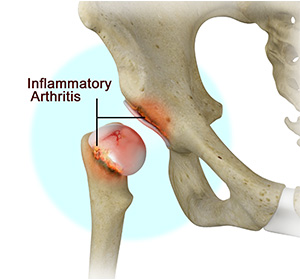
Inflammation of the joints is referred to as arthritis. The inflammation arises when the smooth covering (cartilage) at the end surfaces of the bones wears away. In some cases, the inflammation is caused when the lining of the joint becomes inflamed as part of an underlying systemic disease. These conditions are referred to as inflammatory arthritis. It is an autoimmune disease because it occurs when your immune system, which normally fights against infection, starts destroying healthy joints.
Tyler Bron, M.D.
Board-certified Orthopaedic SurgeonDr. Bron completed his fellowship in Adult Reconstruction, specializing in the treatment of arthritic hip & knee conditions at the University of Colorado in Aurora. He received specialized training in dealing with complex injuries of the hip and knee & has a particular interest in the treatment of hip arthritis through a muscle-sparing Anterior Approach. Dr. Bron works diligently with each & every patient to customize treatment plans & optimize outcomes to meet the patient’s individual goals.
What Causes Inflammatory Arthritis?
Cause of inflammatory arthritis is mainly attributed to genetic factors. Genes play a major role in causing inflammatory arthritis. Another important factor is environmental which includes viral infections. Smoking cigarette, stress, hormones, and infectious agents are some of the other factors that can be a trigger for the condition.
What are the Symptoms of Inflammatory Arthritis?
Inflammatory arthritis is mainly characterized by aching pain, joint tenderness, morning stiffness, warmth, and swelling. Symptoms are not localized to the damaged joint since it affects the entire body, you may also experience fever, inflammation of the eye, weakness, organ damage, loss of hair, dry mouth and skin rashes.
How is Inflammatory Arthritis Diagnosed?
Inflammatory arthritis can be diagnosed by a physical examination and by reviewing your medical history. X-rays, laboratory tests and other imaging tests may be ordered to diagnose or rule out other conditions. X-rays may show thinning or erosion in the bones or loss in joint space. Laboratory studies will show the presence of a rheumatoid factor or other antibodies.
How is Inflammatory Arthritis Treated?
Treatment mainly involves a conservative approach. Your doctor may prescribe several drugs which include disease-modifying anti-rheumatic drugs (DMARDs), biologic agents (newer DMARDs), non-steroidal anti-inflammatory drugs (NSAIDs) and steroids. The DMARDs reduce the body’s immune response against the joints, whereas the NSAIDs and steroids reduce swelling and pain. Corticosteroids stop the inflammation that threatens the internal organs or joints. Another treatment involves exercise programs to retain mobility and strength. Surgical treatment is rarely considered in this condition.